
Singapore remains the #1 destination for entrepreneurs in Asia. However, in 2026, the landscape has shifted toward Sustainability, Digital-First operations, and AI-integration. Whether you are a local founder or a foreigner looking to incorporate, this 10-chapter guide covers every dollar, document, and decision you’ll need to make.
Chapter 1: The 2026 Economic Outlook for Startups
Before you register, you must understand the current market. In 2026, the Singapore government has doubled down on the “Green Plan 2030.”
- Key Growth Sectors: Agrotech, Renewable Energy Financing, and AI-driven SaaS.
- The “Work-From-Anywhere” Norm: Employment laws have evolved to support hybrid models, impacting how you calculate office rental vs. digital infrastructure costs.
Chapter 2: Choosing Your Legal Structure
Selecting the right entity affects your taxes and personal liability.
- Private Limited (Pte Ltd): The most common. It is a separate legal entity. Shareholders are not liable for debts beyond their share capital.
- Sole Proprietorship: Easiest to set up but highest risk. You and the business are the same—your personal assets are at risk.
- Limited Liability Partnership (LLP): Best for professional firms (lawyers, accountants).
Chapter 3: The Step-by-Step Registration Process (ACRA)
In 2026, the BizFile+ portal has been replaced by the ACRA-Go mobile-first ecosystem.
- Step 1: Name Reservation. Must be unique and not infringe on trademarks.
- Step 2: Appoint Officers. You need at least one director residing in Singapore, a qualified Company Secretary, and an Auditor (unless exempted).
- Step 3: Registered Address. Cannot be a P.O. Box. (The Home Office Scheme still applies for HDB/Private residents).
- Step 4: Issued Capital. You can start with as little as $1, but $50,000 is recommended for better banking credibility.
Chapter 4: Banking and Corporate Finance in 2026
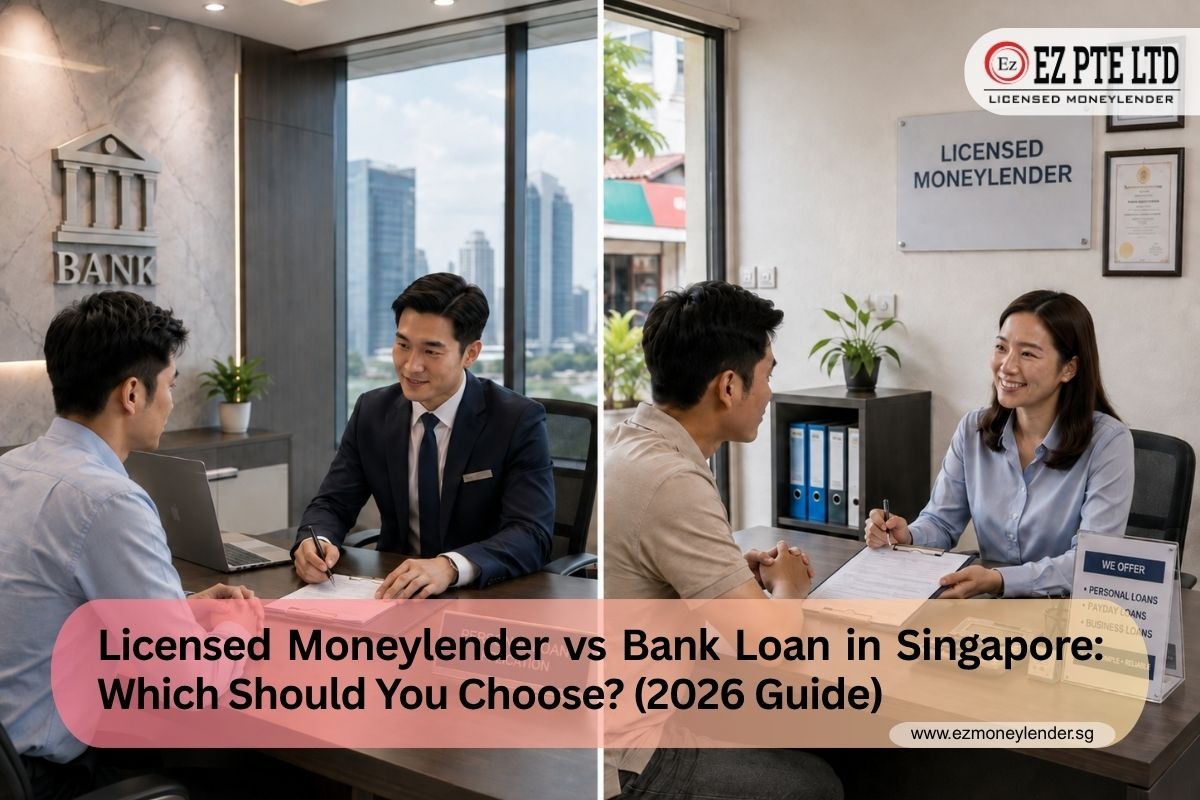
Traditional banks (DBS, OCBC, UOB) now compete with Digital Full Banks (DFBs).
- Digital Banks: Best for fast setup and high-frequency digital transactions.
- Traditional Banks: Essential if you require trade financing or large-scale physical assets.
- The Funding Gap: New businesses often face a “6-month wait” for bank credit. This is where Licensed Moneylenders like EZ Pte Ltd provide vital bridge financing for initial inventory or rental deposits.
Chapter 5: Taxation and Incentives (IRAS)
Singapore’s tax regime remains one of the most attractive globally.
- Corporate Tax Rate: Flat 17% (with significant exemptions for the first $100k-$200k profit).
- GST Threshold: In 2026, the registration threshold remains at $1 million in taxable turnover.
- The 2026 Innovation Credit: A new tax rebate for companies investing in AI-training for their staff.
Chapter 6: Hiring and Manpower Laws
- CPF Contributions: Mandatory for all Singaporean and PR employees.
- The COMPASS Framework: For hiring foreigners (EP/S-Pass), ensure your company meets the points-based criteria regarding salary and diversity.
- SkillsFuture Enterprise Credit: Use this to offset 90% of out-of-pocket expenses for business transformation.
Chapter 7: Licences and Permits
Depending on your industry, you may need additional “green lights”:
- F&B: SFA (Singapore Food Agency) permits.
- Finance/Fintech: MAS (Monetary Authority of Singapore) licensing.
- Employment Agency: MOM (Ministry of Manpower) license.
Chapter 8: Digital Infrastructure & Cyber Security
In 2026, a “website” isn’t enough. You need:
- Data Protection Officer (DPO): A legal requirement under the PDPA.
- CyberEssentials Mark: A government-backed certification that proves your business is secure against basic hacks.
Chapter 9: Common Pitfalls and How to Avoid Them
- Underestimating Cash Flow: 60% of SG startups fail because they run out of cash, not because they lack customers.
- DIY Accounting: Missing ACRA/IRAS deadlines leads to heavy fines. Always hire a professional secretary.
Chapter 10: Scaling Your Business with EZ Pte Ltd
Every business hits a point where an opportunity arises, but the cash is tied up in invoices.
- Business Loans: Buying stock in bulk to get a discount.
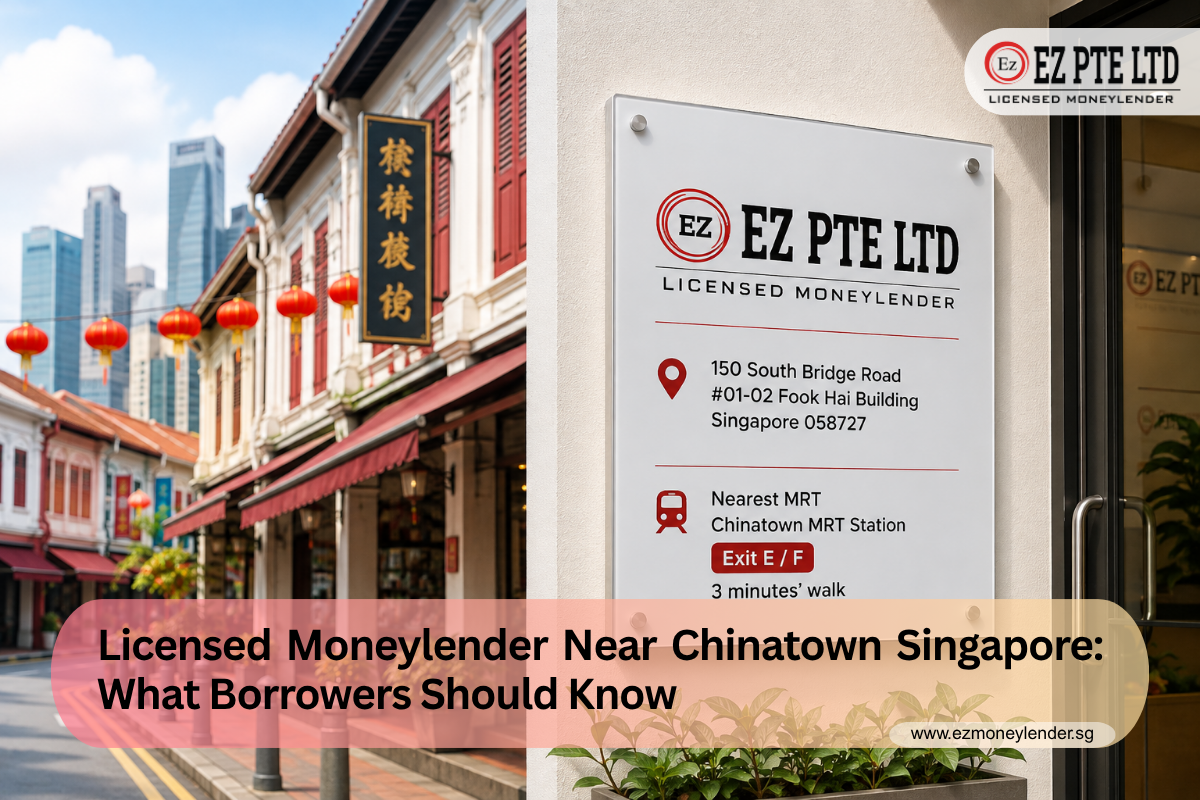
- Renovation Loans: Setting up your physical storefront at Fook Hai Building or beyond.
- Short Term Loans: Fast capital (disbursed in 30 mins) to cover payroll while waiting for a major client payment.
Conclusion
Starting a business in 2026 requires more than just a good idea; it requires a robust financial partner. At EZ Pte Ltd, we have supported Chinatown’s entrepreneurs for years. We provide the speed and flexibility that big banks can’t match.
Ready to launch your empire? Visit us at Fook Hai Building for a coffee and a consultation. Let’s make your 2026 business goals a reality.